
Heating is one of the biggest household expenses in winter. When temperatures drop, energy bills can climb fast, especially in older homes with drafty windows or inefficient systems.
Here are 10 practical ways to lower your heating bill this winter without sacrificing comfort. Many cost little or nothing to try.
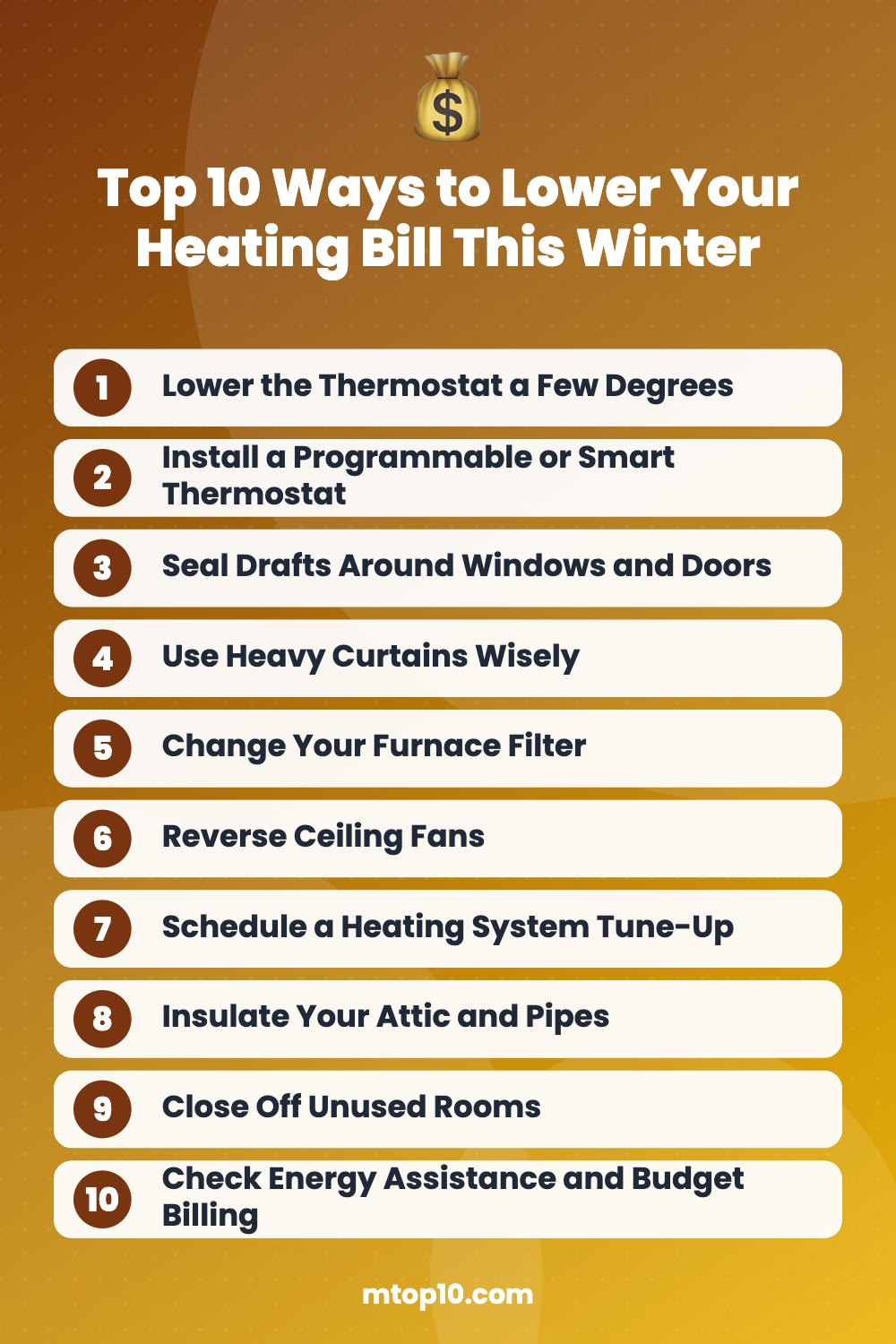
Quick List: Top 10 Ways to Lower Your Heating Bill This Winter
- Lower the Thermostat a Few Degrees
- Install a Programmable or Smart Thermostat
- Seal Drafts Around Windows and Doors
- Use Heavy Curtains Wisely
- Change Your Furnace Filter
- Reverse Ceiling Fans
- Schedule a Heating System Tune-Up
- Insulate Your Attic and Pipes
- Close Off Unused Rooms
- Check Energy Assistance and Budget Billing
1. Lower the Thermostat a Few Degrees
The U.S. Department of Energy notes that turning your thermostat back 7 to 10 degrees for 8 hours a day can save up to around 10 percent a year on heating and cooling.
Lower it while you sleep or are away.
Add a cozy blanket instead.
2. Install a Programmable or Smart Thermostat
A smart thermostat automatically adjusts temperatures based on your schedule.
Some utilities offer rebates for buying one.
It pays for itself over time.
3. Seal Drafts Around Windows and Doors
Use weatherstripping, caulk and door draft stoppers to block cold air.
Check outlets on exterior walls too.
These are cheap DIY fixes with real impact.
4. Use Heavy Curtains Wisely
Close thick curtains at night to keep heat in and open them on sunny days to let natural warmth in.
South-facing windows get the most sun.
Thermal curtains work even better.
5. Change Your Furnace Filter
A dirty filter makes your furnace work harder. Check it monthly in winter and replace as needed.
It improves efficiency and air quality.
Write the date on each filter.
6. Reverse Ceiling Fans
Set ceiling fans to run clockwise at low speed to push warm air down from the ceiling.
It helps distribute heat more evenly.
There is usually a small switch on the fan housing.
7. Schedule a Heating System Tune-Up
Annual maintenance helps your furnace or heat pump run efficiently and prevents costly breakdowns.
Do it before the coldest months.
Ask about efficiency improvements.
8. Insulate Your Attic and Pipes
Heat rises and escapes through poorly insulated attics. Adding insulation is one of the best long-term investments.
Check for federal or state energy efficiency incentives.
Insulating pipes also prevents freezing.
9. Close Off Unused Rooms
Shut doors to guest rooms or storage areas you do not use.
Do not fully close vents in forced-air systems without professional advice, as it can affect system balance.
Focus heat where people actually are.
10. Check Energy Assistance and Budget Billing
Many utilities offer budget billing that spreads costs evenly across the year. Low-income households may qualify for LIHEAP assistance.
Call your utility to ask about programs.
It reduces bill shock in peak months.
Frequently Asked Questions
What temperature should I set my thermostat in winter?
Around 68°F while you are awake and lower while sleeping or away is a common energy-saving recommendation.
Do space heaters save money?
They can if you heat only one small room and lower the main thermostat, but they are expensive for heating a whole home.
What is the cheapest way to keep a house warm?
Sealing drafts, using curtains wisely, lowering the thermostat and dressing warmly are the cheapest ways.
Final Thoughts
Lowering your heating bill is all about small, consistent changes. Seal drafts, use your thermostat wisely and maintain your system, and you will notice the savings month after month while staying warm and comfortable all winter.