

Cold temperatures, snow, ice and road salt put extra stress on your vehicle. A car that runs perfectly in summer can struggle on a freezing morning if it is not prepared.
Here are 10 winter car care tips to complete before the first snow so you can drive safely and avoid breakdowns all season.
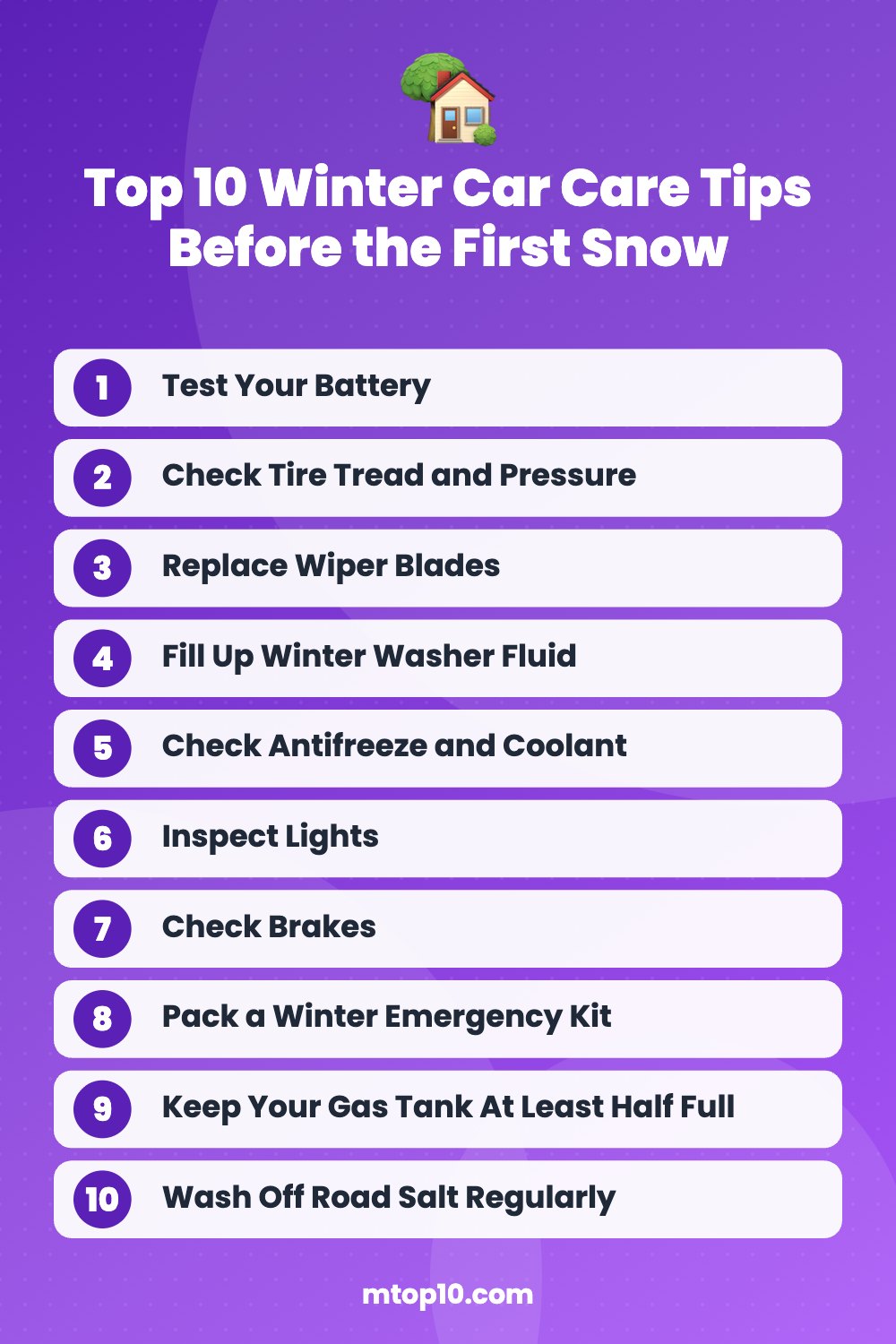
Quick List: Top 10 Winter Car Care Tips Before the First Snow
- Test Your Battery
- Check Tire Tread and Pressure
- Replace Wiper Blades
- Fill Up Winter Washer Fluid
- Check Antifreeze and Coolant
- Inspect Lights
- Check Brakes
- Pack a Winter Emergency Kit
- Keep Your Gas Tank At Least Half Full
- Wash Off Road Salt Regularly
1. Test Your Battery
Cold weather reduces battery power, and many batteries fail on the first freezing morning.
Most auto parts stores test batteries for free.
Replace batteries that are weak or more than four to five years old.
Clean any corrosion from the terminals.
2. Check Tire Tread and Pressure
Good tread is essential for traction on snow and ice. Use the penny test or a tread gauge.
Tire pressure drops as temperatures fall, so check it monthly.
Consider winter tires if you live in an area with heavy snow.
Inflate to the pressure listed on the driver’s door jamb.
3. Replace Wiper Blades
Worn wipers streak and struggle against snow and slush.
Winter wiper blades are designed to resist ice buildup.
Lift wipers off the windshield overnight during storms.
Replace them every six to twelve months.
4. Fill Up Winter Washer Fluid
Use washer fluid rated for freezing temperatures so it does not freeze in the lines.
Keep an extra bottle in the trunk.
Road salt spray makes windshields dirty fast.
Never use plain water in winter.
5. Check Antifreeze and Coolant
Coolant protects your engine from freezing. Make sure it is at the right level and mixture.
A mechanic can test its freeze protection.
Follow your owner’s manual for the recommended type.
Never open a hot radiator cap.
6. Inspect Lights
Shorter days mean more driving in the dark. Check headlights, brake lights and turn signals.
Clean foggy headlight lenses for better visibility.
Clear snow from lights before driving.
Replace dim bulbs in pairs.
7. Check Brakes
Snow and ice demand responsive brakes. Have pads and rotors inspected if you hear squealing or notice longer stopping distances.
Brake maintenance is a key safety item.
Do not wait until the first icy day.
Get it done during a routine oil change.
8. Pack a Winter Emergency Kit
Include a blanket, ice scraper, snow brush, flashlight, jumper cables, small shovel, sand or kitty litter for traction, water and snacks.
Add a phone charger and gloves.
It could be a lifesaver if you get stuck.
Keep it in the trunk all winter.
9. Keep Your Gas Tank At Least Half Full
A fuller tank helps prevent fuel line freeze-ups and ensures you have fuel if stuck in traffic or a storm.
It also gives you heat if you are stranded.
Never run the engine in an enclosed space.
Clear snow from the exhaust pipe if you are stuck.
10. Wash Off Road Salt Regularly
Road salt causes rust and corrosion on the underbody.
Wash your car, including the undercarriage, every couple of weeks in winter.
Wax before winter for extra protection.
Your car will last longer.
Frequently Asked Questions
When should I prepare my car for winter?
Prepare your car in fall, before the first freeze or snowfall, so you are not caught off guard.
Do I really need winter tires?
If you regularly drive in snow and ice, winter tires offer significantly better traction and braking than all-season tires.
What should be in a winter car emergency kit?
A blanket, ice scraper, flashlight, jumper cables, small shovel, traction material, water, snacks and a phone charger.
Final Thoughts
A little winter car care goes a long way toward safe, stress-free driving. Check your battery, tires, wipers and fluids, pack an emergency kit and keep salt off your car. You will be ready for whatever winter throws at the road.