
The holiday season means more online orders and more packages on the way. Scammers know this and send fake delivery texts, emails and calls designed to steal your money or personal information.
Here are the top 10 holiday package delivery scams and simple ways to protect yourself.
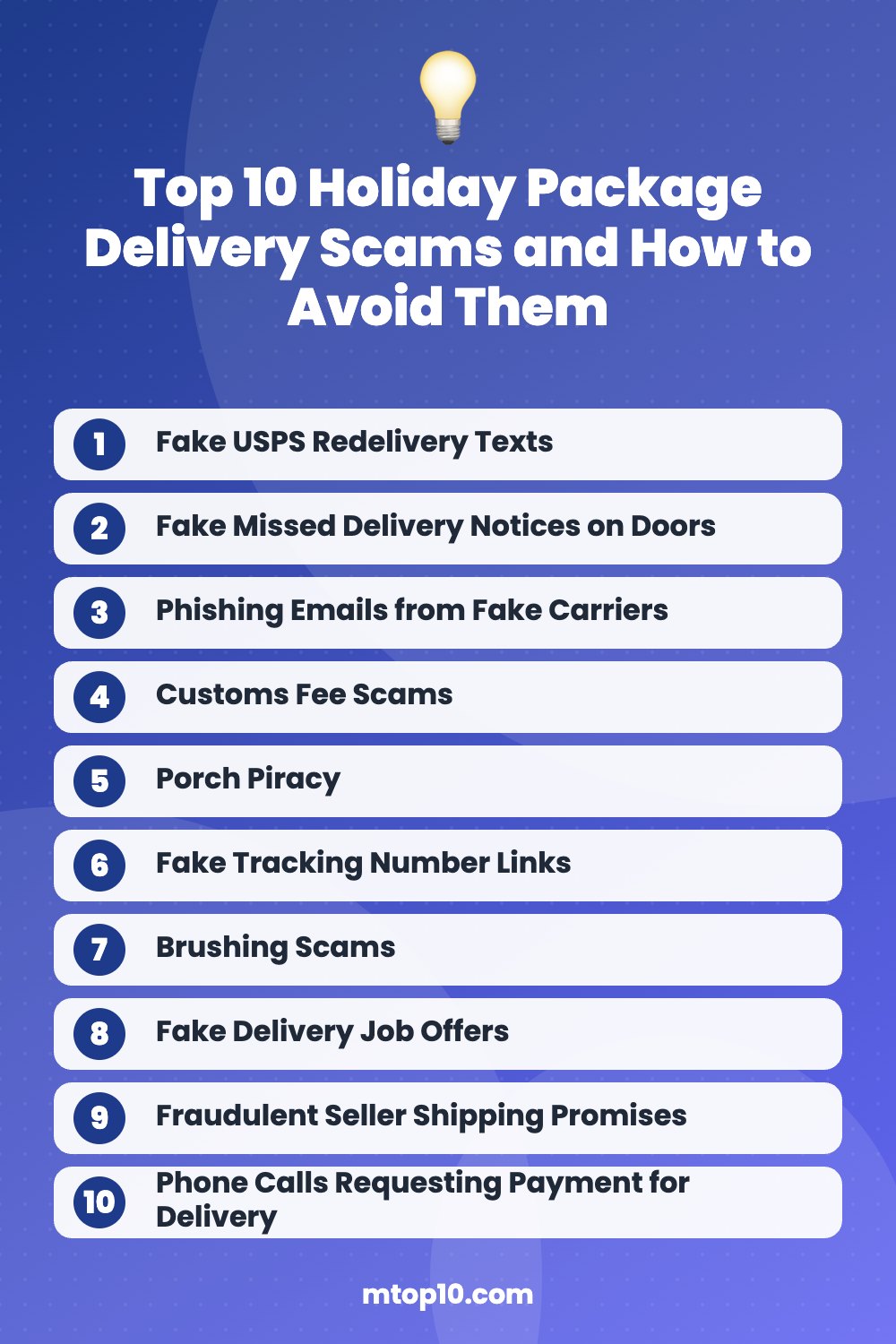
Quick List: Top 10 Holiday Package Delivery Scams and How to Avoid Them
- Fake USPS Redelivery Texts
- Fake Missed Delivery Notices on Doors
- Phishing Emails from Fake Carriers
- Customs Fee Scams
- Porch Piracy
- Fake Tracking Number Links
- Brushing Scams
- Fake Delivery Job Offers
- Fraudulent Seller Shipping Promises
- Phone Calls Requesting Payment for Delivery
1. Fake USPS Redelivery Texts
Texts claim your package could not be delivered due to an incomplete address and ask you to click a link and pay a small fee.
USPS does not send unsolicited texts with links unless you signed up for tracking.
Delete and report these messages.
2. Fake Missed Delivery Notices on Doors
Scammers leave fake notices asking you to call a number, which can lead to premium-rate charges or requests for personal details.
Verify notices through the carrier’s official website.
Real notices include tracking details.
3. Phishing Emails from Fake Carriers
Emails that look like UPS, FedEx or DHL contain malicious links or attachments.
Do not open attachments or click links in unexpected emails.
Check tracking directly on the carrier’s site.
4. Customs Fee Scams
Messages claim you owe customs duties on a package, often for something you did not order.
Legitimate carriers provide clear official invoices.
Never pay through gift cards.
5. Porch Piracy
Package thieves follow delivery trucks and steal boxes from porches.
Use delivery lockers, require signatures, or schedule delivery when you are home.
Doorbell cameras can help deter thieves.
6. Fake Tracking Number Links
Scammers send a tracking link that leads to a fake site requesting login details.
Copy tracking numbers into the official carrier site yourself.
Bookmark official tracking pages.
7. Brushing Scams
You receive packages you never ordered. This often means someone used your information to post fake reviews.
Change passwords and monitor your accounts.
You can generally keep unordered merchandise under FTC guidance.
8. Fake Delivery Job Offers
Ads offer work-from-home package reshipping jobs, which can involve handling stolen goods.
Research companies carefully.
If they ask you to reship items, it is likely a scam.
9. Fraudulent Seller Shipping Promises
Fake online stores promise fast delivery for hot gifts and never ship.
Buy from reputable retailers and check reviews.
Pay with a credit card for added protection.
10. Phone Calls Requesting Payment for Delivery
Callers say a package needs payment before delivery.
Hang up and contact the carrier through official channels.
Never give card details to unexpected callers.
Frequently Asked Questions
Does USPS send text messages about packages?
USPS only sends texts if you requested tracking updates, and they do not include links asking for payment or personal information.
How do I report a fake delivery text?
Forward the text to 7726 (SPAM) and report it to the carrier and the FTC at ReportFraud.ftc.gov.
How can I prevent package theft?
Use lockers, require signatures, ship to work or a pickup point, and install a doorbell camera.
Final Thoughts
Package delivery scams spike during the holidays, but a little caution goes a long way. Always verify through official carrier websites, never pay delivery fees through links or gift cards, and protect your porch. Share these tips with family members so everyone can shop safely this season.