
Every winter, cities across North India, including Delhi, Noida, Gurugram, Lucknow and Kanpur, see the air quality index slip into the poor and severe range. Children are more sensitive to air pollution because they breathe faster and spend more time outdoors playing.
While parents cannot control outdoor air, there are many practical steps that reduce your child’s exposure. Here are 10 ways to protect kids from winter smog.
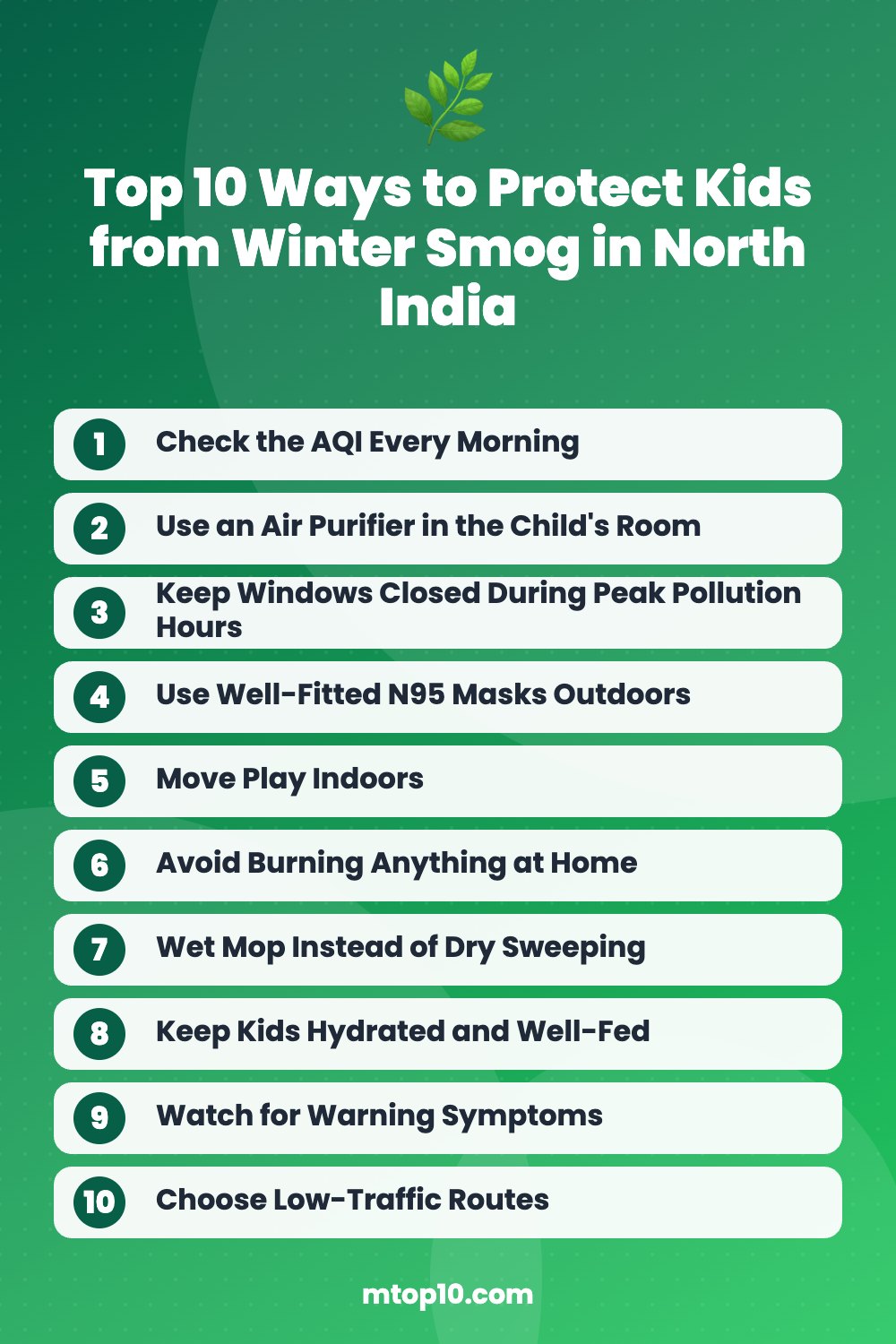
Quick List: Top 10 Ways to Protect Kids from Winter Smog in North India
- Check the AQI Every Morning
- Use an Air Purifier in the Child’s Room
- Keep Windows Closed During Peak Pollution Hours
- Use Well-Fitted N95 Masks Outdoors
- Move Play Indoors
- Avoid Burning Anything at Home
- Wet Mop Instead of Dry Sweeping
- Keep Kids Hydrated and Well-Fed
- Watch for Warning Symptoms
- Choose Low-Traffic Routes
1. Check the AQI Every Morning
Use a reliable AQI app or the official SAMEER app to check air quality before planning outdoor activities.
On days when AQI is very poor or severe, keep outdoor play to a minimum.
Many schools also adjust timings based on official advisories.
2. Use an Air Purifier in the Child’s Room
A HEPA air purifier sized for the room is one of the most effective ways to improve indoor air.
Run it in the bedroom, especially at night when kids spend 8 to 10 hours there.
Clean or replace filters as recommended.
3. Keep Windows Closed During Peak Pollution Hours
Pollution is often highest in the early morning and late evening during winter.
Ventilate the home in the afternoon when air quality is usually slightly better.
Seal gaps under doors with door stoppers.
4. Use Well-Fitted N95 Masks Outdoors
Cloth masks do little against fine particles. Children above the age recommended by the manufacturer can use child-sized N95 masks for school commutes.
The fit matters more than the brand.
Masks are not recommended for very young children; reduce exposure instead.
5. Move Play Indoors
Swap park time for indoor games, dance, yoga, board games or indoor sports centres on high AQI days.
Keeping kids active indoors supports their health and mood.
Plan a weekly indoor activity schedule for smog season.
6. Avoid Burning Anything at Home
Incense sticks, mosquito coils, angithis and wood fires add to indoor pollution.
Use electric heaters and avoid smoking anywhere near children.
Cook with exhaust fans or chimneys on.
7. Wet Mop Instead of Dry Sweeping
Dry sweeping lifts dust particles into the air. Wet mopping traps dust and keeps indoor air cleaner.
Wipe window sills and fan blades regularly.
Vacuum cleaners with HEPA filters are a good option.
8. Keep Kids Hydrated and Well-Fed
Encourage water, soups and seasonal fruits like oranges, guava and amla rich in vitamin C.
A balanced diet supports overall health during a tough season.
Avoid excess packaged snacks.
9. Watch for Warning Symptoms
Persistent cough, wheezing, breathlessness, itchy eyes or frequent colds may be linked to pollution exposure.
Consult a paediatrician if symptoms continue, especially if your child has asthma or allergies.
Keep any prescribed inhalers handy.
10. Choose Low-Traffic Routes
If your child walks or cycles to school, choose routes away from main roads and traffic signals where vehicle pollution is highest.
Keep car windows closed and use recirculation mode in traffic.
Small route changes can reduce exposure significantly.
Frequently Asked Questions
At what AQI should kids stay indoors?
When AQI is in the very poor (301 to 400) or severe (above 400) range, it is best to limit outdoor activity for children.
Are air purifiers safe for babies?
Yes, HEPA air purifiers are generally safe and helpful in a baby’s room. Avoid models that produce ozone.
Do masks help children during pollution?
Well-fitted N95 masks designed for kids can help older children. Very young kids should avoid masks; reduce their exposure instead.
Final Thoughts
Smog season is stressful for every parent, but small daily habits make a real difference. Track the AQI, clean indoor air, keep kids active indoors on bad days and watch for symptoms. With a bit of planning, you can help your children stay healthy and happy through the winter.